The passionate people behind the thriving British cheese industry
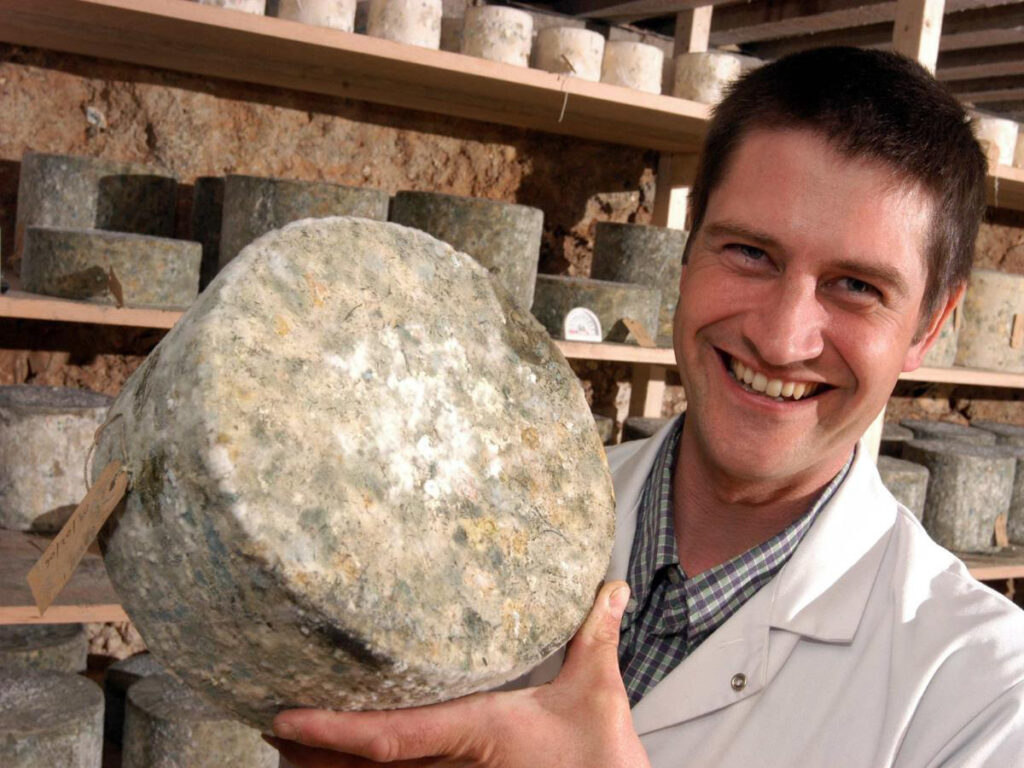
Ask ten cheesemakers why they do what they do, and you’ll get ten different answers. Some are keeping alive a raw-milk recipe, reviving last recipes, custodians of a family farm, or protecting methods that have barely changed in centuries. Other producers will tell you they’re innovating: chasing a new shape, a new milk, a new taste and texture and new ways of thinking about what British cheese can be.
The producers behind British Fine Foods’ cheese range sit right across that spectrum. Look closely and you can trace a line from the purest traditionalists to the boldest experimenters, and the story of British cheese, really, is the story of everything in between.
The Keepers of the Flame
At one extreme sit the families who see themselves less as founders and more as custodians.
In Somerset, Montgomery’s Cheddar is made much as it has been for generations: from raw milk, wrapped in cloth and given the time it needs to mature on wooden shelves. Jamie Montgomery represents one of Britain’s most respected cheesemaking dynasties, and he’s spent years championing raw milk and traditional cheesemaking. Taste a piece and you’ll understand why, its rich nutty flavour speaks for speaks for itself.
Keen’s Cheddar tells a near-identical story a few farms over: a fifth-generation operation still making traditional raw-milk cheddar the way the family always has. Between them, Keen’s and Montgomery’s aren’t just making cheese: they’re maintaining a living archive of how Somerset cheddar is supposed to taste.
Colston Bassett Dairy has a different sort of family story in Nottinghamshire. Founded as a farming co-operative in 1913, it still makes Stilton in the Vale of Belvoir using milk from nearby farms. For generations Britain’s most recognisable stilton cheese belongs to a place and a community, as well as to the skilled people making it today.
And then there’s Bath Soft Cheese, from the Padfield’s family farm near Bath where heritage is still at its heart. The Padfield family’s recipe traces back to a letter written by Admiral Lord Nelson and has survived four generations to give us the soft, creamy cheese we still enjoy today.
The Revivalists: old recipes, new purpose: the cheeses that nearly got away!
Between the purists and the pioneers sits a fascinating middle group: producers who didn’t inherit a tradition so much as rescue one.
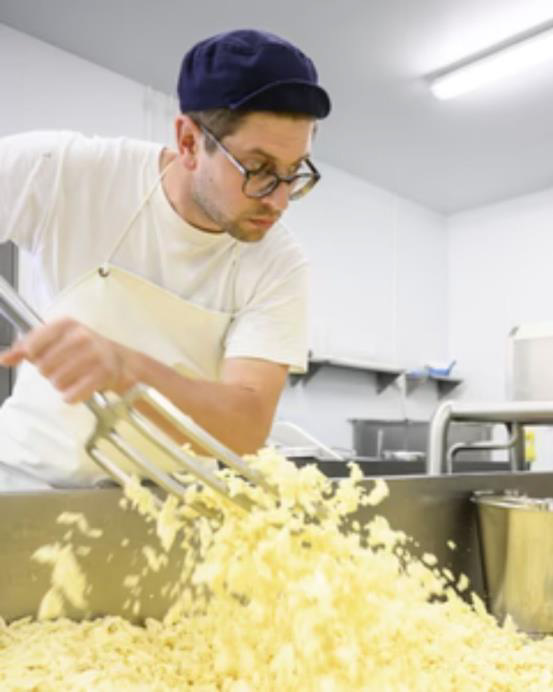
Making Pitchfork cheddar, are reviving traditional clothbound, raw-milk cheddar at a moment when very few people still know how. Named Pitchfork cheddar because that’s how they toss the curd. Their involvement in the £300,000 Great Cheese Robbery gave the brand an unexpected jolt of fame, but the more interesting story is their dairy-swap experiment with fellow cheesemakers, literally testing how the same recipe changes when the land underneath it changes. That's heritage technique in service of a genuinely modern question: what does terroir mean for cheese, the way it does for wine?The Trethowan Brothers
Dorset Blue Vinny owes its return to Mike Davies, who set about reviving the old cheese at Woodbridge Farm in the early 1980s. He made his first attempts in the farm garage and matured them in the family pantry. When blue mould began appearing on the walls, the floor and even the cornflakes, his wife Christine suggested it might be time to move the operation out of the house. The Davies family still makes Blue Vinny on the farm today, thankfully in a dairy of its own. Every wheel made today exists because one person refused to let a recipe die.
Cornish Yarg
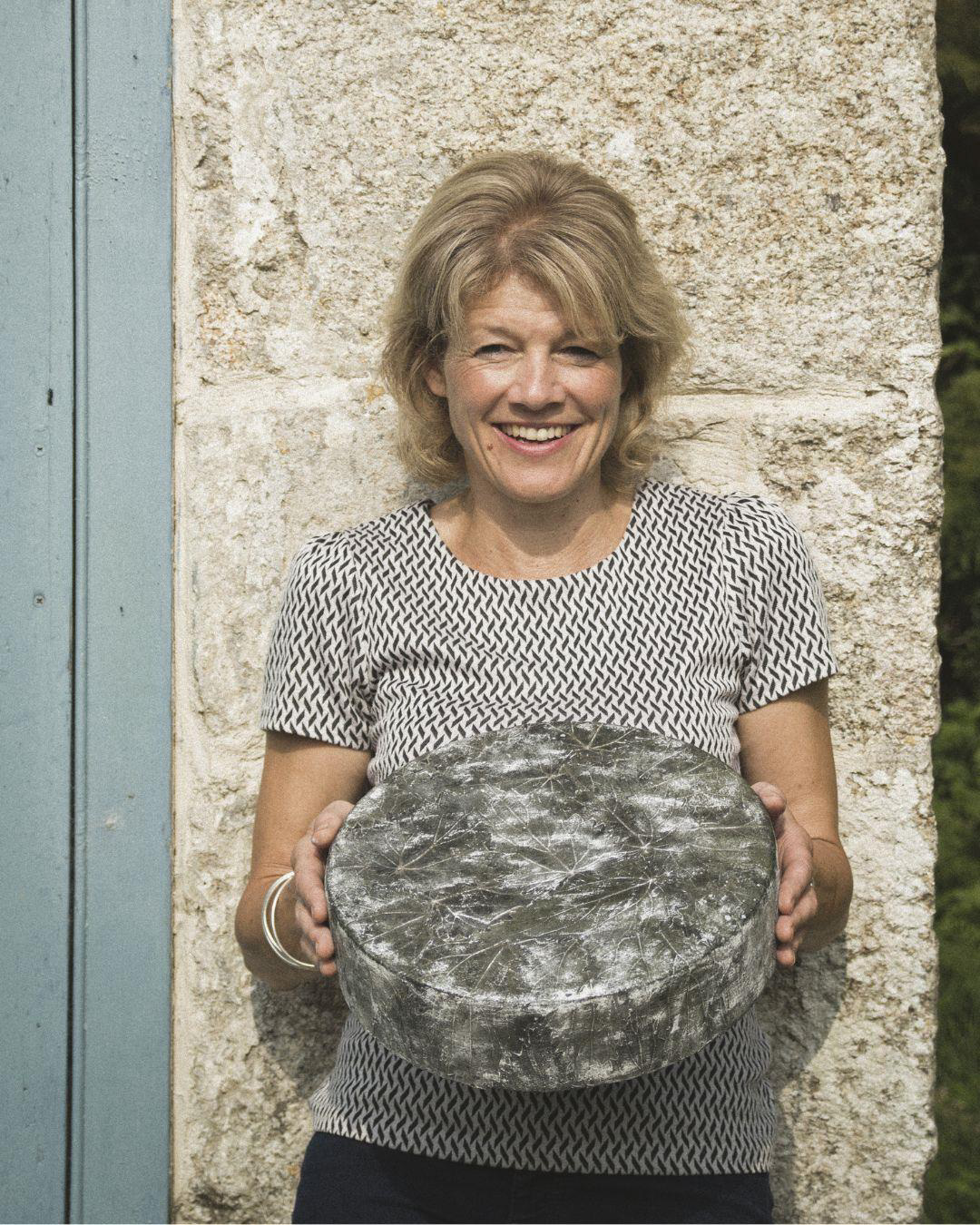
began with the sort of attic discovery you’d usually find in a novel. In the 1980s, farmer Alan Gray came across an old recipe for a cheese wrapped in nettles. He and his wife Jenny tried making it, and gave it the wonderfully simple name Yarg: Gray backwards. The cheese eventually found its way to Lynher Dairy, now run by Catherine Mead and her son Otto. Their team still wraps every cheese in nettles by hand, giving a forgotten idea a rather lively second life.
The Experimenters
At the innovation end, the producers are less interested in what cheese was and more interested in what it could become.
Alsop & Walker might be the most quietly radical name on this list. Arthur Alsop is a self-taught cheesemaker with an eye for possibilities. He makes Lord London in moulds originally designed for Spanish Tetilla cheese, giving it that wonderfully distinctive shape (tetilla is Spanish for nipple). Under its white, bloomy rind, the cheese softens as it matures, while rich Guernsey milk from local farms helps give it its layered flavour.
A British cheese literally shaped by foreign tradition, remade into something new and unique to our terroir.
Godminster shows how far innovation can extend beyond the cheese itself. Richard Hollingbery converted the family farm to organic production and built a whole visual identity around it: the burgundy wax, the heart-shaped wheel. It’s traditional cheddar-making wrapped in a distinctly modern instinct for branding and standing out on a cheese board.
White Lake Cheese, founded by friends Peter Humphries and Roger Longman, is perhaps the most restless of all, moving fluidly across goat, sheep and cow’s milk and treating experimentation itself as the house style rather than any single recipe.
And Fen Farm Dairy deserves a category of its own. Jonny and Dulcie Crickmore didn’t set out to preserve a British tradition: they set out to beat a French one, building Baron Bigod using milk from their own Montbéliard cows to create a farmhouse Brie capable of rivalling the best of Normandy. It’s ambition dressed up as homage.
What the Spectrum Tells You
Line these producers up and a pattern emerges: heritage in British cheesemaking rarely means standing still. Even the strictest traditionalists, Montgomery’s and Keen’s, are protecting something precisely because everyone around them keeps innovating. And even the boldest experimenters are usually reviving, repurposing or reinterpreting something old, not inventing from nothing.
That tension, guard it or push it, is really what makes British cheese worth writing about at all. It’s also, not coincidentally, what makes it worth putting on a cheeseboard.
See the quality British Cheeses from British Fine Foods>
Coming next in this series: the makers behind British Fine Foods’ charcuterie range, and the unlikely career changes that led them there.
No related articles found.


